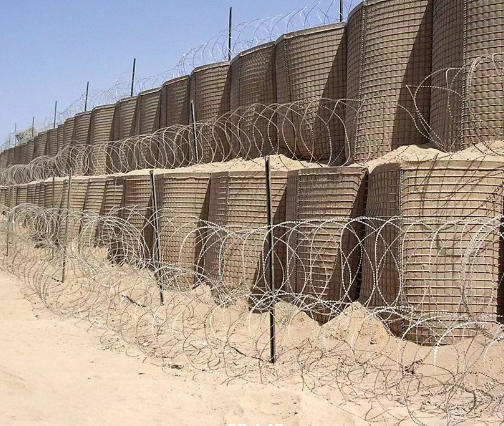
Introduction In environments where the threat of explosive devices or industrial accidents is a reality, the margin between catastrophe and survival is often measured by the integrity of a physical barrier. A blast wall is not merely a fence or a simple partition; it is a highly engineered defense system designed to confront the devastating physics of an explosion. Its primary mission is to intercept the supersonic shockwave and the accompanying fragmentation, redirecting this lethal energy away from protected zones to preserve human life and structural assets. Structural Composition and Mechanics The effectiveness of a blast wall lies in its ability to manage extreme kinetic energy. Unlike standard walls designed for static loads, blast walls are constructed to withstand dynamic, high-velocity impacts. They are typically built using high-strength reinforced concrete, structural steel, or advanced composite materials. The core mechanical principle is energy dissipation. When an explosion occurs, the resulting overpressure wave travels outward at tremendous speed. A properly designed blast wall acts as a sacrificial and deflective barrier. Reinforced concrete walls utilize their massive weight and tensile strength to resist deformation, while steel and composite structures may be engineered to absorb energy through controlled plastic deformation. The geometry of the wall is also critical; angled or curved surfaces are often employed to deflect the shockwave upwards or sideways, rather than allowing it to reflect directly back onto the protected area. Strategic Applications Industrial Safety and Hazard Containment In the petrochemical, pharmaceutical, and energy sectors, blast walls are a mandatory safety feature. They are strategically placed to isolate high-risk areas such as storage tanks, processing reactors, and control rooms. In the event of a catastrophic equipment failure or chemical explosion, these walls contain the blast, preventing a chain reaction and protecting adjacent facilities and personnel. Military and Security Defense For military bases, embassies, and high-security government buildings, blast walls form the first line of defense against vehicle-borne improvised explosive devices (VBIEDs) and other ballistic threats. These perimeter barriers are designed to stand firm against significant explosive charges, creating a safe standoff distance and shielding the interior compound from both blast overpressure and deadly shrapnel. Urban Infrastructure Protection In densely populated areas, blast walls are increasingly integrated into urban design to protect critical infrastructure like power substations, data centers, and transportation hubs. They serve as a resilient buffer against both accidental explosions and intentional acts of sabotage, ensuring the continuity of essential services. Core Advantages Life Safety: The primary function of a blast wall is to save lives by creating a protected refuge and preventing structural collapse in occupied spaces. Asset Protection: By containing and redirecting explosive forces, these walls prevent costly damage to expensive equipment and critical infrastructure. Operational Continuity: In industrial settings, a robust blast protection system minimizes downtime after an incident, allowing for faster recovery and resumption of operations. Conclusion A blast wall stands as a testament to the intersection of structural engineering and human safety. It is a silent guardian, engineered to endure the unimaginable forces of an explosion so that people and critical assets do not have to. As threats evolve and industrial processes become more complex, the ongoing innovation in blast-resistant design ensures that these formidable barriers will continue to be a cornerstone of modern risk management and security planning.
Customer Reviews
Daniel Carter
Senior Procurement Manager
We purchased border fence and airport fence systems for multiple security projects. The product quality was consistent, and the supplier provided clear technical support throughout the process.
Kenji Nakamura
Project Engineer
The highway guardrail and bridge fence products met our engineering requirements perfectly. Material quality, surface treatment, and packaging all exceeded expectations.
Samuel Okafor
Operations Director
The electric fence and temporary fencing systems performed very well in our large-scale projects. Delivery was efficient, and communication remained smooth from production to shipment.
Emma Laurent
Purchasing Director
The municipal fencing and ornamental fence products offered both durability and aesthetic value. Customization options helped us meet diverse project requirements.
Frequently Asked Questions
We can connect you with trusted installation teams in many regions. Remote or on-site guidance from our technical staff can be arranged.
Standard lead time for border fence orders is 3–5 weeks after order approval, based on volume and project specifications. Priority service can be arranged.
Yes, standard border fence panels offer 3-year corrosion resistance under common outdoor conditions. Enhanced protective coatings are available upon request.
Our border fence systems are designed for wind loads up to 9 levels. Custom configurations can be arranged for specific terrain and project requirements.
Get In Touch
Ready to Discuss Your Project?
Send us your requirements today and receive fast support, product details, and factory pricing within 24 hours.
Call Us
+86 19358286056
Mon-Fri, 8am-6pm CST
Email Us
sales@fieldfence.me
We reply within 24 hours
WhatsApp
+86 19358286056
Instant messaging available
Our Address
South Area of Anping Industrial Park, Anping County, Hengshui City