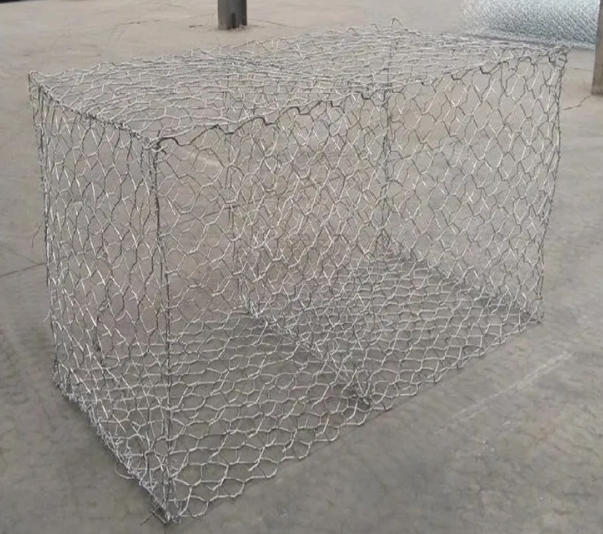
When planning a retaining wall, riverbank stabilization, or architectural facade, the success of the project often hinges on the quality of the gabion mesh and the precision of its installation. While gabions are celebrated for their simplicity, treating them as a "one-size-fits-all" solution can lead to structural failures or premature corrosion. This guide explores the technical nuances of selecting the right mesh and executing a flawless installation. Material Science: Beyond Basic Galvanization The lifespan of a gabion structure is entirely dependent on its wire coating. In corrosive environments, choosing the wrong material is the most common cause of failure. Hot-Dip Galvanized Steel: The industry standard for most inland applications. It provides a robust zinc coating that sacrifices itself to protect the steel core. Zinc-Aluminum Alloy (Galfan): For projects exposed to saltwater, coastal air, or acidic soils, Galfan (typically 5** or 10** aluminum-zinc alloy) is mandatory. It offers 2 to 3 times the corrosion resistance of standard galvanizing. PVC/PE Coated Wire: A polymer layer extruded over a galvanized or Galfan core. This double-protection system is highly resistant to UV degradation and chemical attacks, making it ideal for highly polluted industrial zones or marine environments. Structural Integrity: Woven vs. Welded The manufacturing process dictates the structural behavior of the mesh: Double-Twisted Hexagonal Woven Mesh: The industry standard for heavy civil engineering. If a wire breaks under extreme stress, the double-twist prevents the entire mesh from unraveling. It is highly flexible and conforms well to uneven terrain. Welded Mesh: Offers a cleaner, more geometric appearance, making it the preferred choice for architectural facades and residential landscaping. However, welded joints are rigid; they do not tolerate differential settlement as well as woven mesh and require a highly stable foundation. The Critical Role of Fill Stone Sizing A gabion is only as strong as its fill material. The relationship between the mesh aperture and the stone size is governed by the "inferior-diameter ratio." Optimal Sizing: Stones should generally be 1.5 to 2 times larger than the mesh aperture. Gradation Matters: A well-graded mix of stone sizes ensures high density and minimal void space. If the stones are too uniform in size, the cage will settle excessively over time. If too many small stones (fines) are used, they will wash out through the mesh, leading to structural collapse. Best Practices for Installation and Lacing Proper installation prevents the "bulging" effect commonly seen in failed gabion walls. Stiffeners are Mandatory: For any gabion box taller than 0.5 meters, internal cross-ties (stiffeners) must be installed during the filling process to prevent the front and back faces from bowing outward. Lacing and Binding: All adjacent panels must be securely laced together using spiral binders or heavy-duty lacing wire. The lacing pitch (spacing) should be tight enough to prevent stones from escaping but loose enough to allow for structural flexibility. Layered Filling: Stones should be placed in layers (typically 25-30 cm thick), with manual packing between layers to minimize voids. Machine filling is faster but almost always requires subsequent hand-packing to achieve the necessary density. Conclusion Gabion mesh is a highly engineered product that demands respect for its technical specifications. By understanding the differences in wire coatings, mesh types, and stone gradation, engineers and contractors can ensure their structures remain stable, functional, and aesthetically pleasing for decades. Investing in premium materials and meticulous installation is the true secret to long-lasting gabion infrastructure.
Customer Reviews
Daniel Carter
Senior Procurement Manager
We purchased border fence and airport fence systems for multiple security projects. The product quality was consistent, and the supplier provided clear technical support throughout the process.
Kenji Nakamura
Project Engineer
The highway guardrail and bridge fence products met our engineering requirements perfectly. Material quality, surface treatment, and packaging all exceeded expectations.
Samuel Okafor
Operations Director
The electric fence and temporary fencing systems performed very well in our large-scale projects. Delivery was efficient, and communication remained smooth from production to shipment.
Emma Laurent
Purchasing Director
The municipal fencing and ornamental fence products offered both durability and aesthetic value. Customization options helped us meet diverse project requirements.
Frequently Asked Questions
We can connect you with trusted installation teams in many regions. Remote or on-site guidance from our technical staff can be arranged.
Standard lead time for border fence orders is 3–5 weeks after order approval, based on volume and project specifications. Priority service can be arranged.
Yes, standard border fence panels offer 3-year corrosion resistance under common outdoor conditions. Enhanced protective coatings are available upon request.
Our border fence systems are designed for wind loads up to 9 levels. Custom configurations can be arranged for specific terrain and project requirements.
Get In Touch
Ready to Discuss Your Project?
Send us your requirements today and receive fast support, product details, and factory pricing within 24 hours.
Call Us
+86 19358286056
Mon-Fri, 8am-6pm CST
Email Us
sales@fieldfence.me
We reply within 24 hours
WhatsApp
+86 19358286056
Instant messaging available
Our Address
South Area of Anping Industrial Park, Anping County, Hengshui City