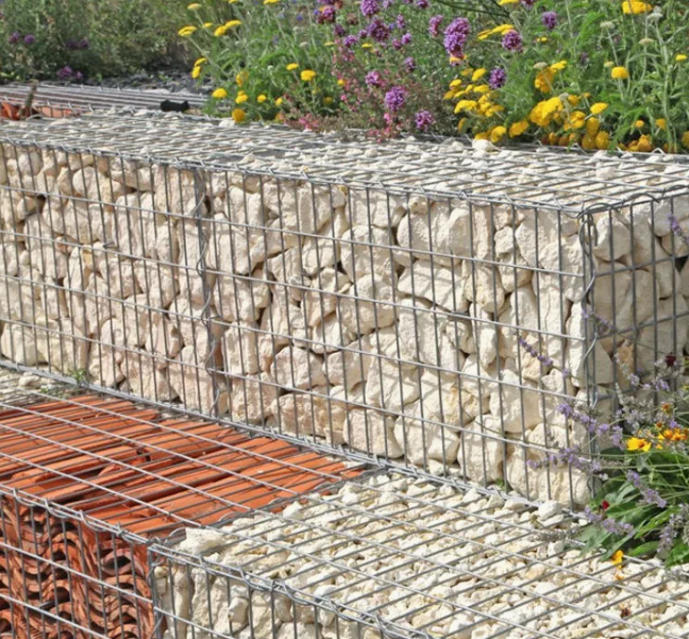
Product Description
Gabion boxes have become one of the most popular solutions in modern construction, civil engineering, and landscape design. A gabion box is essentially a wire mesh container filled with stones, rocks, or other fill materials, forming a strong and flexible structure that can be used in a wide range of applications. Whether you are building a retaining wall, protecting a riverbank from erosion, or creating a stunning decorative feature in your garden, gabion boxes offer a reliable, cost-effective, and environmentally friendly solution.
What Is a Gabion Box?
A gabion box, also known as a gabion basket or stone cage, is a rectangular wire mesh container made from high-quality galvanized steel wire or PVC-coated wire. The mesh is typically constructed using a double-twisted hexagonal weave, which provides excellent structural stability and ensures that even if one wire breaks, the entire structure remains intact.
Gabion boxes are delivered in a folded and flat-packed form, making them easy to transport and store. On-site, they are unfolded, assembled, and filled with locally available stones to form walls, barriers, revetments, or decorative structures. Their simple installation process and versatile applications make them a preferred choice for contractors, engineers, and landscape designers around the world.
Types of Gabion Boxes
Welded Gabion Box
Welded gabion boxes are manufactured from welded wire mesh with rigid panels that are connected using spiral binders or lacing wire. The welded construction gives these boxes a clean, uniform, and modern appearance, making them highly suitable for architectural and decorative applications such as garden walls, fence panels, privacy screens, and building facade cladding. Welded gabion boxes are easy to assemble and maintain their shape well, even when filled with smaller stones.
Woven Gabion Box
Woven gabion boxes are made from double-twisted hexagonal wire mesh, which gives them greater flexibility compared to welded types. This flexibility allows them to adapt to uneven ground and settlement without cracking or losing structural integrity. Woven gabion boxes are commonly used in large-scale civil engineering projects such as riverbank protection, slope stabilization, dam construction, and retaining walls where ground movement is expected.
PVC-Coated Gabion Box
PVC-coated gabion boxes feature an additional layer of plastic coating applied over the galvanized wire, providing superior corrosion resistance. This extra protection makes them ideal for projects located in coastal areas, saltwater environments, industrial zones, or regions with high humidity and heavy rainfall. The PVC coating is available in various colors, adding an aesthetic element to decorative applications.
Common Specifications
Gabion boxes are available in a wide range of specifications to meet different project requirements. The wire diameter typically ranges from 2.0 mm to 4.0 mm, with common mesh openings of 60 × 80 mm, 80 × 100 mm, and 100 × 120 mm. Standard box sizes include 1 × 1 × 0.5 m, 2 × 1 × 0.5 m, and 2 × 1 × 1 m, while custom dimensions are also available upon request.
The materials used for gabion boxes include hot-dipped galvanized wire, electro galvanized wire, Galfan wire, and PVC-coated wire, with tensile strength ranging from 350 to 550 MPa. For shipping and storage, gabion boxes are folded flat and bundled with steel strips, making them compact and easy to transport in containers.
Applications of Gabion Boxes
Retaining Walls
Gabion retaining walls are widely used in highway, railway, bridge, and residential construction projects. They provide excellent structural support while allowing natural drainage through the mesh, which significantly reduces hydrostatic pressure behind the wall. This makes gabion retaining walls more stable and durable than traditional concrete retaining walls.
Erosion Control
Gabion boxes are highly effective in preventing soil erosion along riverbanks, coastlines, hillsides, and slopes. Their permeable structure allows water to flow through freely while holding the soil and stones firmly in place, preventing washout and land degradation.
Landscaping and Decoration
In modern landscape design, gabion boxes have become a popular choice for creating decorative walls, garden borders, seating benches, planters, privacy screens, and outdoor fireplaces. Filled with colorful or specially selected stones, gabion structures create a natural, rustic, and visually appealing look that blends seamlessly with the surrounding environment.
Flood Control
Gabion barriers and gabion revetments are commonly used in flood prevention and water management projects. They can be quickly assembled and deployed as temporary or permanent flood defense structures, providing immediate protection for communities and infrastructure in flood-prone areas.
Sound Barriers
Gabion walls are increasingly being used as sound barriers along highways, railways, and industrial areas. The stone-filled structure effectively absorbs and reduces noise pollution, creating a quieter environment for nearby residents and workers.
Advantages of Gabion Boxes
Gabion boxes offer numerous advantages that make them a preferred choice over traditional construction methods. Their high-tensile steel wire construction provides exceptional strength and durability, allowing them to withstand heavy loads, extreme weather conditions, and long-term exposure to the elements.
The flexible nature of gabion structures allows them to adapt to ground movement and settlement without cracking or collapsing, which is a significant advantage over rigid concrete structures. The open mesh design ensures excellent natural drainage, preventing water buildup and reducing pressure on the structure.
From an environmental perspective, gabion boxes are highly eco-friendly. They use natural stones as fill material, promote vegetation growth through the mesh openings, and do not require concrete or other energy-intensive materials. This makes them a sustainable choice for green construction projects.
In terms of cost, gabion boxes are more economical than traditional concrete walls when considering material costs, labor costs, equipment requirements, and long-term maintenance. Their simple installation process means that no specialized skills or heavy machinery are required, further reducing project expenses.
How to Install a Gabion Box
The installation of a gabion box is a straightforward process that can be completed in a few simple steps. First, the ground must be prepared by leveling the surface and ensuring a stable foundation. Next, the folded gabion box is unfolded and the panels are connected using spiral binders or lacing wire to form the complete box structure.
Once assembled, the box is positioned in the desired location and filled with hard, durable stones. For the best visual appearance, larger and more uniform stones should be placed on the outer faces while smaller stones are used to fill the center. After filling, the top lid is secured with lacing wire or spiral binders. If a taller structure is needed, additional layers of gabion boxes can be stacked on top and secured with connecting wire.
Why Choose Gabion Boxes?
Gabion boxes offer a perfect combination of strength, flexibility, durability, and aesthetics. Whether you need a retaining wall for a construction project, erosion control for a riverbank, flood protection for a community, or a decorative feature for your garden, gabion boxes provide a reliable and cost-effective solution that stands the test of time.
As a professional gabion box supplier, we provide high-quality welded gabion boxes, woven gabion boxes, and PVC-coated gabion boxes in various sizes, specifications, and materials. All products are manufactured to meet international quality standards and can be fully customized according to your specific project requirements.